
The Business Behind the NFL Draft

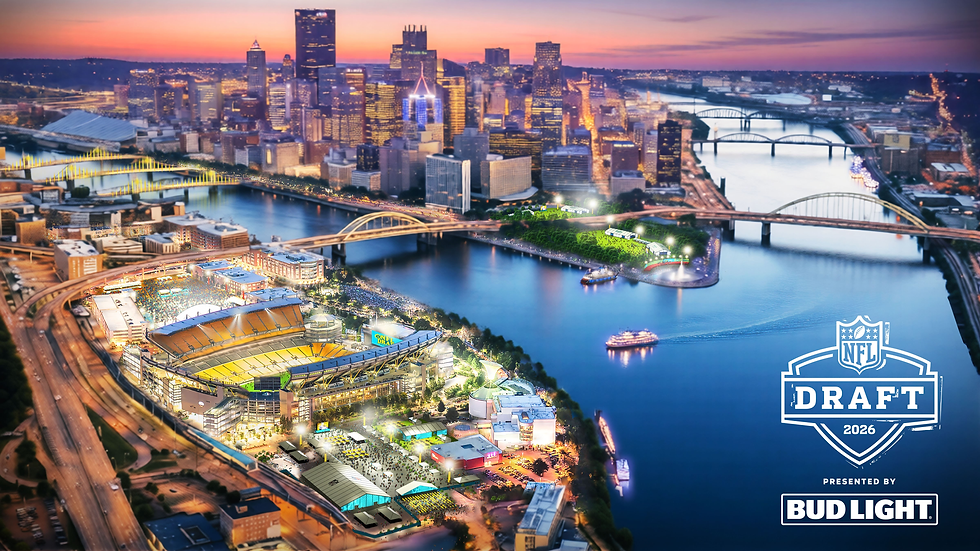
The 2026 NFL Draft starts this Thursday in Pittsburgh. Most people tune in to see who their favorite team picks, but I'd argue that the more compelling story is the business behind it. The draft is expected to attract 500,000–700,000 visitors across three days which could create an economic impact of $125–$200 million for the region.
If you zoom out, it’s one of the best case studies in the business of sports. The NFL is building a three-day window where it owns attention, monetizes it at scale, and reinforces how the league operates long term.
Owning the Calendar
The Draft sits in late April because it’s one of the only windows where nothing else fully owns the sports conversation. The NBA and NHL are early in the playoffs and MLB is in its early season.
So the NFL steps in and takes the entire weekend. Instead of competing for attention, they position themselves where they don’t have to. It’s a simple move, but incredibly effective. When there’s no clear alternative, they become the default.
Turning Attention Into Revenue
Once they control the window, monetization becomes much easier. The audience is guaranteed, which is why broadcast partners can charge a premium and why ad inventory sells out months in advance. There’s no uncertainty for brands. They know exactly when it’s happening, how many people will be watching, and how engaged that audience will be.
You’re getting 10M+ viewers, predictable timing, and long watch times. Most live content today is fragmented, but the draft pulls everything into one place. That’s why it quietly becomes one of the most valuable non-game products in sports. The order matters here. The NFL locks in attention first, then builds revenue on top of it.

Expanding Distribution
From there, the NFL continues to expand how the draft is distributed. It lives across streaming platforms and direct-to-consumer channels. The core product doesn’t change, but the number of ways to access it keeps growing.
Once you have something people care about, the goal is to remove friction. Make it easy to find, easy to watch, and available everywhere your audience already is. They’re making sure it reaches as many people as possible. That’s how you maximize the value of attention you’ve already captured.
The “Hope Economy”
The sponsorship side works because of something deeper than just viewership numbers. At draft time, every fan base believes they got better. Every team is selling upside, potential, and a fresh start. Nobody has lost yet, and that creates a completely different emotional environment than a typical game.
Brands are able to align themselves with optimism surrounding the team. That’s a much cleaner and more positive space, which makes it easier to activate and connect with fans.
It’s a good reminder that audience size is only part of the equation. How people feel when they’re watching matters just as much.

Why Cities Keep Lining Up
The host city model is another layer that stands out. Compared to something like the Super Bowl, the cost to host the Draft is relatively low. Cities invest a few million dollars into infrastructure, security, and logistics, which is manageable relative to other major events.
In return, they get massive exposure. Hundreds of thousands of visitors, national media coverage, and a few days where the entire football world is focused on their city. Even if the projected economic impact numbers are inflated, the visibility alone is valuable. It’s essentially a rebrand moment. That kind of attention is hard to replicate.
It also reinforces that physical events still matter. When people show up in person, it adds another layer of energy and value that digital alone can’t replace.
The Real Engine: Cost Control
One of the most important pieces of the business side of the draft is labor economics. The draft is the foundation of the NFL’s rookie wage scale. Every player is slotted into a contract based on where they’re picked. There’s no real negotiation and no open market, which creates a controlled system for incoming talent.
At a time when the salary cap is over $300M per team, this matters a lot. Rookie contracts are significantly cheaper than veteran deals for similar production. That creates a real advantage. Teams that draft well don’t just get talent, they get efficiency. That efficiency leads to flexibility, and over time that flexibility compounds.
This is what drives long-term success. The Draft is about building a system that allows teams to sustain winning.
Conclusion
The NFL is moving closer to owning both the content and the distribution. Streaming continues to expand, and there’s momentum around taking the Draft international. Each layer builds on the last. Media, sponsorship, live events, and league economics all reinforcing each other. Because the foundation is so strong, there’s still room to grow. The ceiling hasn’t been hit yet.
The NFL Draft is easy to overlook because there’s no actual game being played. But from a business standpoint, it checks every box. It captures attention, monetizes that attention, creates value for partners, drives exposure for cities, and reinforces the league’s long-term economics. All of that happens in three days. There is a lot to learn from the NFL draft for the Sports Business Leaders community.


